

Printable Activities for Independent Home Learning
What if independent practice began with a better-matched page, not more reminders? Printable activities for independent learning give children a...
What if independent practice began with a better-matched page, not more reminders? Printable activities for independent learning give children a clear place to start, but a worksheet that feels confusing or too challenging may bring them straight back to you. Look for a task your child can understand, enjoy, and try with confidence.
If you’re juggling a busy day, choosing an activity, explaining it, and staying close by can feel like a lot. You want your child to practise independently without turning the experience into a struggle. A few small choices help: pick a familiar skill, keep the directions simple, and set out only what’s needed.
This guide explains how to choose activities that suit your child, prepare a low-fuss workspace, and introduce a task without hovering. You’ll also find ideas for building a repeatable, screen-free routine with ready-to-print worksheets, coloring pages, and educational stories. Start small, then use each experience to guide the next choice.
Key Takeaways
- Independent learning means a child can attempt a suitable task with limited help, not that they must manage every step alone.
- Choose printable activities for independent learning by starting with your child’s interests and a skill they already recognize.
- Worksheets, coloring pages, puzzles, and stories offer different ways to practise. A familiar format can be a comfortable starting point.
- A simple setup routine helps your child know what to do next while you stay available if they get stuck.
- Ready-to-print worksheets, coloring pages, books, and educational stories make it easier to prepare screen-free activities for home or classroom use.
What Does Independent Learning Look Like with Printable Activities?
Independent learning doesn’t mean handing a child a page and expecting them to figure out every detail alone. It means they can attempt a task suited to their current skills, using clear directions and only a little adult help. The goal is a growing sense of “I can try this,” not a perfect, interruption-free session.
Independent practice is a child’s supported attempt at a suitable task, not learning without supervision. Your role is to prepare the activity, make the first step clear, and stay available. Show where to begin, then give your child room to draw, match, color, or solve at their own pace. If they get stuck, a calm hint can help them continue without taking over.
This fits the wider idea of Independent study, where learners take an active role while still having guidance when needed. At home, that could mean your child completes one familiar page while you work nearby.
What makes a printable activity manageable on its own?
A manageable page makes the next move easy to spot. Look for a clear starting point, familiar instructions, and an ending your child can recognize, such as completing a set of matches or coloring a picture. If the directions feel confusing, explain them before stepping back. Your child shouldn’t have to guess what the task is asking.
One focused task is often easier to approach than a crowded page with several different directions. A child who knows how to circle matching pictures may be ready to try that task alone, even if a page with extra writing feels like too much. Readiness varies, so choose based on interest, familiarity, and how comfortably your child understands the activity, not age alone.
Why use printables for screen-free practice?
A ready-to-print page is easy to set out at a table or another comfortable spot. There’s no screen to navigate during the activity, and the child can see the task in front of them. Depending on the page, they might draw, color, match pictures, or work with words. Choose a format that feels inviting, then keep the setup simple with only the supplies needed.
Printable activities for independent learning make it easier to offer an offline task without turning preparation into another project. Luv Printables offers instant-download activities, including worksheets, coloring pages, books, and educational stories for home and classroom use. Explore instant download kids activities to see ready-to-print options. One page, clear directions, and a nearby grown-up can be plenty to get started.
How to Choose Printable Activities That Match Your Child’s Readiness
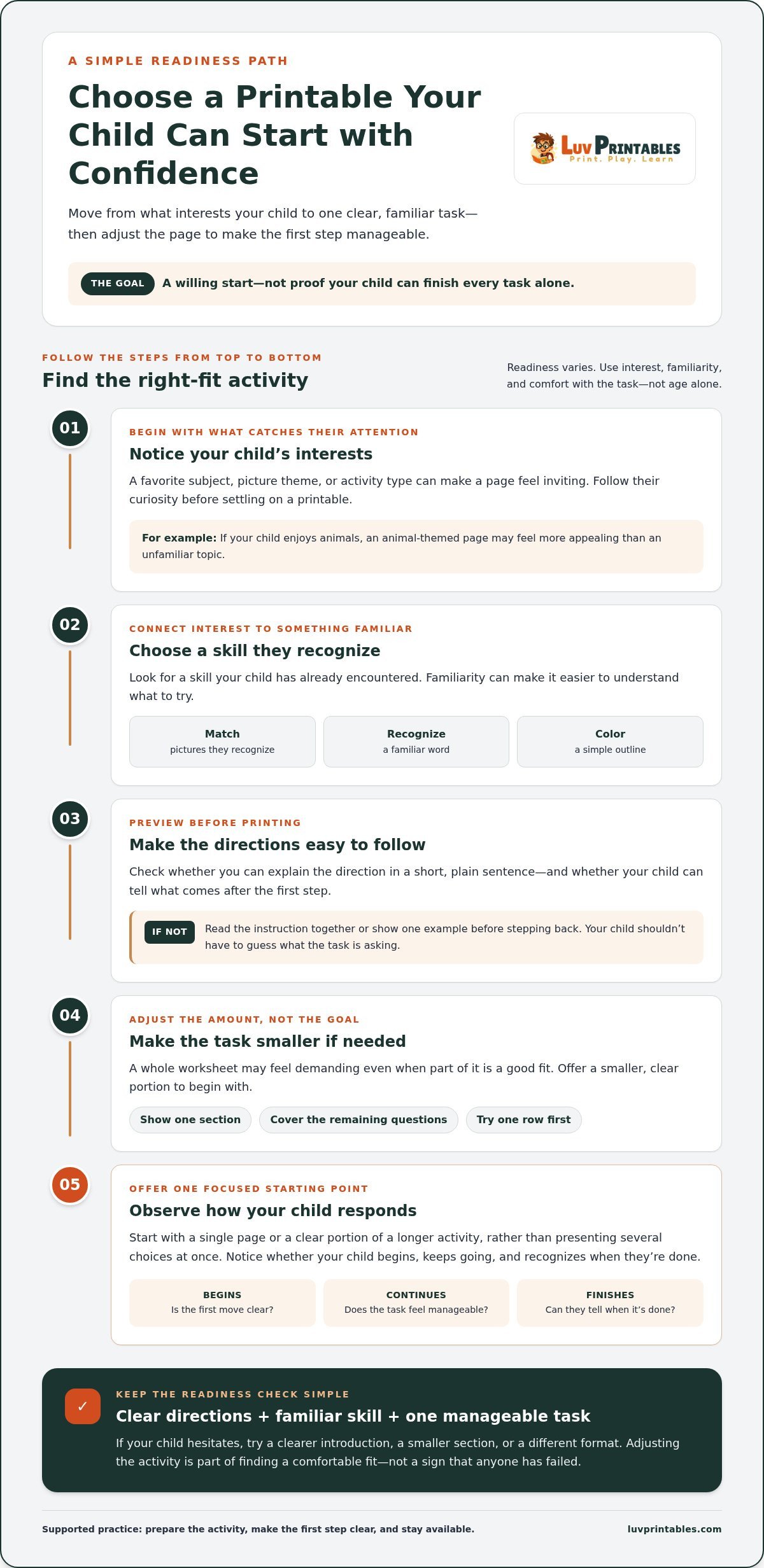
The best starting page isn’t necessarily the one with the most tasks or the most advanced-looking skill. It’s the one your child can approach with interest and reasonable confidence. Use a simple sequence: notice what catches their attention, choose a familiar skill, then offer one focused task.
- Notice interests. A favorite subject, picture theme, or type of activity can make the page feel inviting.
- Choose a familiar skill. Look for something your child has already encountered, such as matching pictures, recognizing a word, or coloring within a simple outline.
- Pick one task. Start with a single page or a clear portion of a longer activity, rather than presenting several choices at once.
Quick readiness check: choose clear directions, a familiar skill, and one manageable task. This gives you a practical way to narrow the options without trying to predict exactly how your child will respond. A printable can offer practice, but no single page guarantees a particular developmental result.
Start with interests and skills the child already recognizes
Follow your child’s curiosity. If they enjoy animals, a themed page may feel more appealing than an unfamiliar topic. Connect that interest to a skill they’ve met before. For example, a child who has tried finding matching pictures may be ready for a simple matching activity with a theme they like.
Keep the first attempt light. You’re looking for a willing start, not proof that your child can finish every task alone. If they hesitate, the page may need a clearer introduction, a smaller section, or a different format. Adjusting the activity is part of finding a comfortable fit, not a sign that anyone has failed.
Check the directions and task size before printing
Preview the page first. Can you explain the direction in a short, plain sentence? Does your child know what to do after the first step? If not, read the instruction together or show one example before inviting them to continue. A quick preview can prevent repeated explanations once the activity begins.
Check how much the page asks them to do. A full worksheet may feel demanding, even if one part is just right. Fold the page to show a smaller section, cover the remaining questions with a blank sheet, or invite your child to complete one row first. Notice whether they begin, keep going, and recognize when they’re done. Their response can guide your next choice.
A word search can be a focused option for a child who’s ready to look for familiar words. Explore printable word search puzzles for ideas about choosing and solving this format. For another starting point, browse printable activities from Luv Printables and choose a page that fits your child’s interests and current comfort.
Which Printable Activity Formats Work Best for Independent Practice?
No single format is best for every child or every moment. A worksheet can feel reassuringly clear, a puzzle may spark curiosity, and a coloring page may invite a calm creative pause. Compare what each format asks your child to do, then choose the one that feels approachable today. Familiarity matters: a child who knows how a page works may be more ready to begin with less help.
Worksheets, puzzles, and coloring pages: different ways to begin
Think about the starting action and how much support it may need. A familiar worksheet offers structured practice. A puzzle gives a focused challenge, while coloring offers creative engagement without automatically serving as an academic lesson. Use this comparison to match the format to your child and keep setup simple:
- Worksheet: The child follows directions and completes a task. Choose a familiar skill and point out where to begin.
- Puzzle: The child searches, matches, or solves. Show the goal clearly, then let them try before offering a hint.
- Coloring page: The child chooses colors and fills in a picture. Set out the coloring supplies and let them make it their own.
These are starting points, not rules. A puzzle that feels fun to one child might frustrate another, while a worksheet may be a favorite when its directions are familiar. The format alone doesn’t determine whether a child can work independently. Clear instructions, an inviting task, and the right amount of adult guidance matter too.
Stories and mixed-format activities for variety
A story can offer a different pace. Depending on the activity, a child might read a short passage, listen as you read aloud, or respond with a drawing or another printable task. If your child is comfortable with word searches, Word Sleuth Fun is a named example of a word-search-style activity to consider.
There’s no need to rotate through every format at once. Keep a familiar favorite in the mix, then occasionally offer a different kind of page. A worksheet one day and a coloring page another can make a simple routine feel fresh without creating pressure to finish a stack.
When choosing printable activities for independent learning, focus on what your child will do: follow directions, search, create, or engage with a story. Preview the page and decide what brief introduction would help. If the first step is clear and the task feels manageable, the format is more likely to be a comfortable fit. Stay nearby, notice your child’s response, and use that experience to guide your next choice.
How to Set Up a Printable Activity for More Independent Learning
A small, repeatable setup can help your child understand what to do without needing reminders at every step. Keep the routine light: choose one page, set out the supplies, explain the starting point, then step back. You’re making space for a confident try while staying close enough to help if needed.
- Choose one page. Pick an activity that feels familiar and manageable for your child today.
- Gather the supplies. Set out only what the task needs, such as a pencil or coloring tools.
- Explain the first step. Point to where to begin and say what to do in a short sentence.
- Step back, but stay nearby. Give your child time to try while remaining available for a calm hint.
Prepare the page, materials, and first step
Before handing over the page, clear a little space and remove distractions from the work area. Keep extra worksheets and supplies out of sight so your child can focus on the activity in front of them. Point to the first part and explain it simply. Then invite your child to tell you, in their own words, what they’ll do first. If they can’t explain the direction yet, model one example together.
Keep your introduction encouraging and brief. “Start by matching the pictures” is easier to act on than a string of extra rules. Once your child understands the task, let them take the lead.
Offer support without taking over
When your child pauses, wait a moment before jumping in. They may be thinking, checking the page, or deciding what to try next. If they’re still stuck, offer one small hint or restate the direction rather than completing the answer for them. For example, ask, “Where does the page show you to start?” Then give them another chance to continue.
Celebrate effort as well as finishing. A warm “You kept trying” can make the experience feel encouraging instead of like a test. You don’t need to correct every small mistake during the activity. Focus on whether your child understands the task and feels able to keep going.
Afterward, notice where your child needed help. Was the direction unclear? Did they lose their place, or did the page feel too long? Use that observation to adjust the next activity, perhaps by choosing a clearer format or offering just one portion. This makes printable activities for independent learning easier to tailor to your child’s readiness over time.
For a simple next activity, explore ready-to-print activities from Luv Printables. Choose one page, set out what’s needed, and give your child room to try.
Make Independent Learning Easier with Ready-to-Print Activities
A repeatable activity routine can make screen-free practice easier to fit into home or classroom days. It doesn’t need a strict timetable or a stack of worksheets. Choose a convenient moment, offer one brief, familiar activity, then see how your child responds. A calm, predictable rhythm can make it easier to begin while leaving room for interests and energy to change.
Build a small, repeatable activity routine
Keep the routine simple: prepare, try, finish, and choose what to explore next. Set out the page and any supplies, give your child a chance to work, then pause together when they’re done. They might pick another activity, return to a favorite format later, or be ready to move on. The routine provides a gentle shape without turning each day into a checklist.
Start with a short, familiar task so the activity feels approachable. If your child is eager to continue, offer another page. If they’re ready to stop, finishing one activity is enough. Notice what holds their attention and what feels like a stretch, then adjust the next choice. A routine should be flexible, not a promise to repeat the same activity every day.
Interests shift, and that’s part of the fun. A child who is keen on coloring one week may want a story or word activity another time. Keep a mental note of what they enjoy, what they can begin with little help, and where a quick explanation makes a difference. This helps you choose printable activities for independent learning that feel inviting without adding extra planning.
Choose a printable starting point with Luv Printables
Ready-to-print resources can reduce the preparation involved in setting up an activity. Luv Printables offers instant-download printable activities for children, including worksheets, coloring pages, books, and educational stories. The materials are ready to print without preparation and are designed for screen-free use at home or in classrooms. The different formats give you options when choosing a page that fits your child’s current interests.
Keep the choice easy. If your child is drawn to pictures, browse coloring pages; if they enjoy working with words, choose a word-focused activity. You don’t need to map out a whole week in advance. Set out one screen-free option at a convenient time and let your child explore at a comfortable pace. A small start is still a start.
Ready to find a page that suits your child’s interests? Explore printable activities from Luv Printables and choose a ready-to-print option for your next home or classroom activity.
Make Your Next Learning Moment Easy to Begin
Let the next activity be a small experiment, not a big commitment. Choose a page that matches your child’s interests, set it out at a comfortable moment, and notice what helps them get started. A cheerful try, a question, or a request for a hint can all show you what to offer next. Your routine can grow naturally from there.
Printable activities for independent learning don’t need to fill an entire afternoon. One focused page can create a screen-free pause for practice and curiosity. Luv Printables’ instant-download digital activities are ready to print without preparation, for use at home or in the classroom. Choose a format that feels inviting, then let your child explore at their own pace.
Explore ready-to-print activities for your next screen-free learning moment, and take the next small step toward a routine that feels cheerful and manageable.
Frequently Asked Questions
What are printable activities for independent learning?
Printable activities for independent learning are pages or resources a child can try with limited adult help. For example, a child might complete a familiar matching page while you sit nearby and handle another task. They should understand what the activity asks and where to start. You can still explain a tricky direction or offer a prompt. Independent practice is a supported chance to try, not time when a child is left on their own.
How do I know if a printable activity is right for my child?
Choose an activity your child can begin without guessing what the instructions mean. A useful test is to explain the task once, then ask your child what they’ll do first. If they can point to a starting place and describe the action, try a small portion. If they need repeated explanations or seem frustrated, simplify the page or work through an example together before they continue.
Can young children complete printable activities independently?
Some young children can manage a familiar, simple page with preparation, while others need you close by throughout. Try an activity with a few clear actions, such as finding and circling matching pictures. Place materials within easy reach and demonstrate how to begin. Watch how your child responds, then decide whether to offer more help or let them continue. A positive short attempt is a useful beginning, even if you finish together.
Which printable activities are best for independent learning?
The best choice depends on what your child enjoys and understands. A child who likes clear steps may prefer a familiar worksheet; another may settle into coloring or enjoy a puzzle. Short stories can also offer a change of pace. Try one type at a time rather than presenting several pages together, and notice which format your child returns to or can start with the least prompting.
How can I help without doing the activity for my child?
Give your child a moment to think before stepping in. If they stall, try a gentle prompt such as, “What does this picture tell you?” or “Can you show me where you’re up to?” If the direction is the issue, restate it in simpler words. Keep your help focused on getting them moving again, not supplying the answer. Acknowledge their effort, even if they need support to finish.
Are printable activities useful at home and in the classroom?
Yes, printable activities can fit into both home and classroom routines. At home, a page might offer a quiet option while a caregiver prepares a meal. In a classroom, a familiar task could be available for a child who has finished another activity. In either setting, make the page easy to access, provide the materials it needs, and adjust your guidance to suit the child and the moment.