

Kids Planner Printables: How to Build Daily Routines That Stick
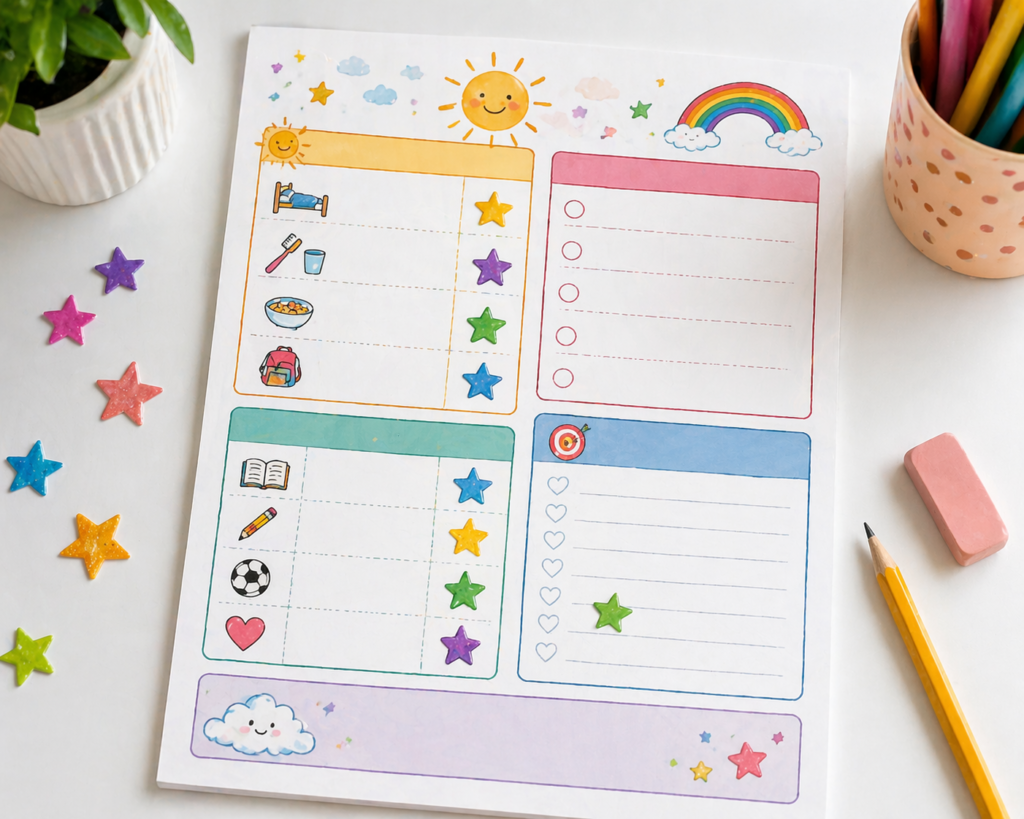
Every parent knows the daily battle: getting kids up, dressed, fed, and ready without turning the morning into a negotiation marathon. Or the bedtime struggle that somehow stretches from 7pm to 9pm. The secret weapon that thousands of parents have quietly discovered? Kids planner printables — simple, visual tools that help children understand their day, take ownership of their responsibilities, and develop the routines that make family life genuinely smoother.
Why Kids Need Routines — And Why Planners Help
Children thrive on predictability. When kids know what’s coming next, they feel safe, secure, and more cooperative. Routines reduce decision fatigue (for both children and parents), minimize power struggles, and build the executive function skills — planning, organization, and self-regulation — that are among the strongest predictors of academic and life success.
The challenge is that telling a child what to do (“brush your teeth, then get dressed, then have breakfast”) has far less impact than showing them. A visual planner — something they can see, check off, and interact with — transforms an abstract instruction into a concrete, manageable task sequence.
What Are Kids Planner Printables?
Kids planner printables are printable planning tools specifically designed for children’s developmental needs and attention spans. Unlike adult planners, they use simple language, colorful visuals, checkboxes, and child-friendly layouts to help kids organize their time and track their responsibilities.
The best kids’ planners come in several formats:
- Daily routine charts — morning, afternoon, and evening sequences with pictures and checkboxes
- Weekly planners — a bird’s-eye view of the week with space for school, activities, and free time
- Goal-setting sheets — simple “what I want to achieve this week” pages for older children
- Habit trackers — daily check-in sheets for building specific habits like reading, exercise, or practicing an instrument
- Chore charts — visual responsibility trackers that make household contributions feel achievable and rewarding
Age-by-Age Guide to Kids Planner Printables
Ages 4–6: Picture-Based Routine Charts
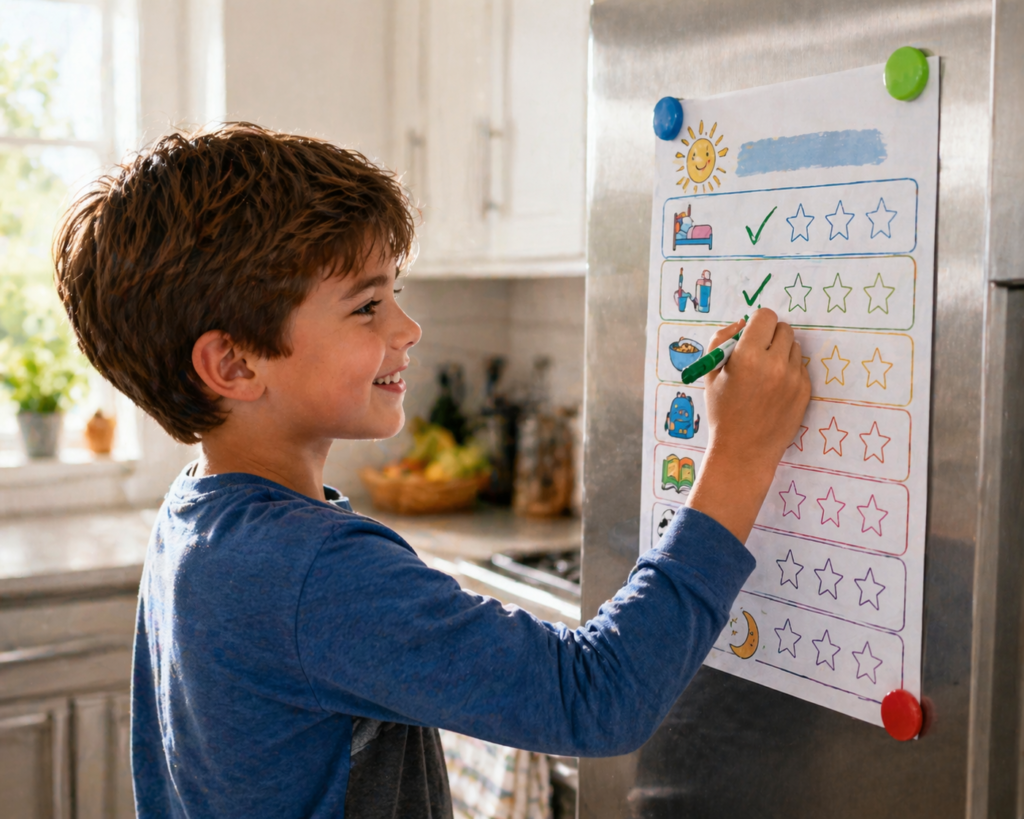
At this age, planners work best when they’re almost entirely visual. A morning routine chart with pictures of a toothbrush, clothes, a cereal bowl, and a backpack is far more effective than a written list. Children this age can’t read reliably, but they can absolutely follow a sequence of pictures — and the act of checking each one off gives them enormous satisfaction.
Ages 7–9: Simple Daily Planners with Writing Spaces
Early elementary children are ready for more structure. A simple daily planner with spaces to write their top three tasks, track their homework, and note something they’re grateful for combines organization with emotional development. Keep it colorful and approachable — this age group responds well to fun designs and positive reinforcement elements like sticker spaces.
Ages 10–15: Goal-Focused Weekly Planners
Older children benefit from planners that mirror what adult planners do, but in a more accessible format. Weekly overviews, goal-setting pages, habit trackers, and reflection prompts (“What went well this week? What would I do differently?”) help tweens and teens develop genuine self-awareness and executive function skills.
How to Introduce a Planner to Your Child
The success of a kids’ planner depends almost entirely on how it’s introduced. Here’s what works:
- Make it a special occasion — present the planner as a gift, not a rule. “I got this especially for you because I think you’re ready for it.”
- Let them personalize it — allow your child to color the planner, add stickers, or write their name on it. Ownership drives engagement.
- Do it together at first — sit down with your child each evening or morning for the first week to fill in the planner together. This builds the habit.
- Celebrate consistency, not perfection — if your child checks off six out of eight tasks, that’s a win worth celebrating.
- Be patient — building a new habit takes time. Most experts suggest it takes 21 to 66 days for a routine to become automatic.
The Unexpected Benefits of Kids’ Planners
Parents who introduce planner printables consistently report benefits they didn’t anticipate:
- Reduced morning conflict — when the chart tells them what to do, kids stop arguing with parents and start following the plan
- Increased independence — children who use planners need less prompting and reminding from adults
- Better sleep — evening routine charts help wind-down routines become automatic, leading to earlier, calmer bedtimes
- Greater confidence — children who complete their planner tasks feel genuinely capable and self-sufficient
- Improved school performance — the organizational skills built by planners transfer directly to academic success
Finding the Right Kids Planner Printables
The best kids’ planner printables are designed with both the child’s developmental stage and their personality in mind. At Luv Printables, our kids’ planner collection includes options for every age group — from simple picture-based routine charts for toddlers to comprehensive weekly planners for tweens. Every design is colorful, child-friendly, and built to make daily routines something children actually look forward to. Browse our planner collection and find the perfect fit for your child today.
Final Thoughts
Kids planner printables are one of the simplest, most effective tools a parent can add to their family toolkit. They give children the structure and predictability they need to feel secure, the visual tools to manage their own responsibilities, and the daily wins that build real confidence over time. Whether you’re trying to survive school mornings or help your child develop lifelong organizational habits, a well-designed kids’ planner printable is a remarkably powerful place to start.