

How Printable Activities Help Kids Reduce Screen Time
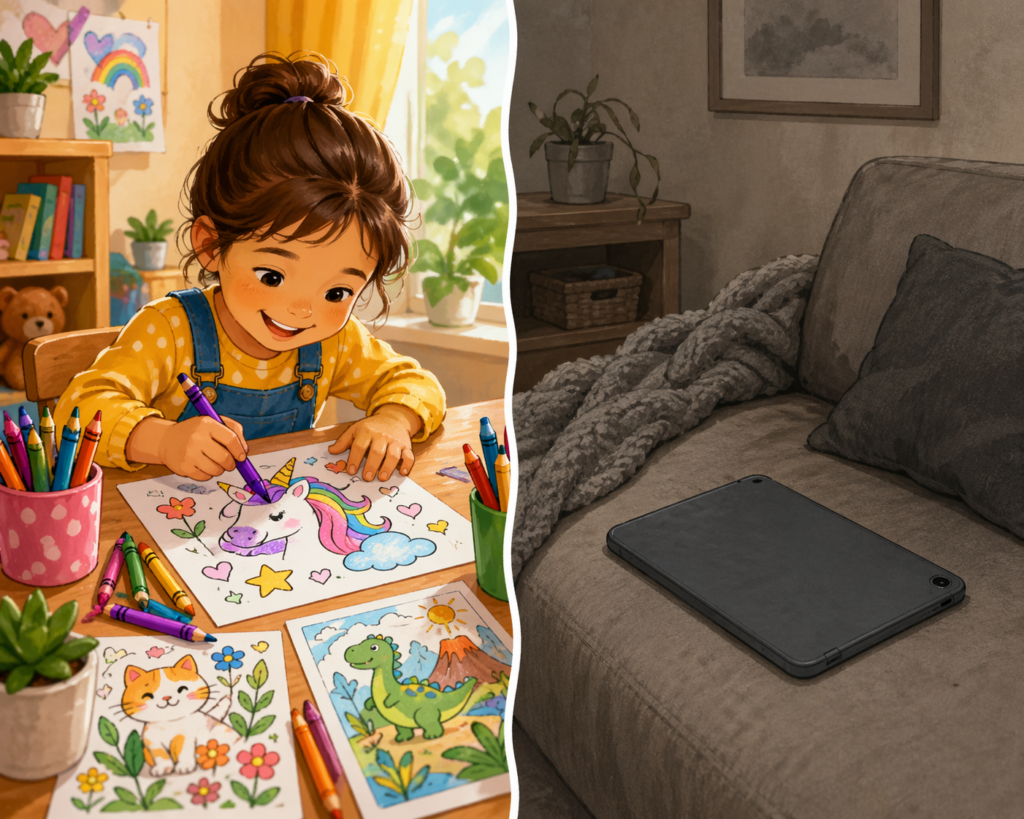
The average child between the ages of 8 and 12 spends nearly five hours a day on screens — and that number has only grown in recent years. If you’ve ever tried to pry a tablet out of a child’s hands, you already know that simply saying “no more screens” doesn’t work. What works is having something better to offer. Printable activities for kids are one of the most effective screen-free alternatives parents and teachers have discovered — because they’re genuinely fun, not just educational.
Why Screen Time Is a Real Concern
Before we talk solutions, it’s worth understanding the problem. Excessive screen time in children has been linked to disrupted sleep patterns, reduced attention span, decreased physical activity, and in some cases, increased anxiety and behavioral challenges. The American Academy of Pediatrics recommends no screen time (except video calls) for children under 18-24 months, one hour per day for ages 2–5, and consistent limits for older children.
The challenge isn’t screens themselves — it’s replacing passive, mindless consumption with active, meaningful engagement. That’s exactly where printable activities come in.
What Makes Printable Activities So Effective as Screen Replacements?
Printable activities work as screen replacements for several key reasons:
- They require active engagement — coloring, writing, drawing, and solving puzzles demand participation, not passive watching
- They have a clear beginning and end — finishing a worksheet gives children a sense of accomplishment that scrolling never can
- They’re tactile — the physical act of holding a crayon or pencil engages the brain differently and more deeply than tapping a screen
- They can be done anywhere — no WiFi needed, no charging required, no app updates
- They invite conversation — a child working on a printable activity naturally invites parents to engage, ask questions, and connect
The Best Printable Activities for Reducing Screen Time
1. Coloring Pages
Coloring is the gold standard of screen-free kid activities. It’s calming, creative, and can be done independently or as a family. For younger children, simple animal or vehicle coloring pages work beautifully. Older kids often enjoy more detailed designs, mandalas, or themed coloring packs.
2. Activity Worksheets
Mazes, word searches, crossword puzzles, dot-to-dot activities, and spot-the-difference games are all printable activities that feel like entertainment while quietly building cognitive skills. These are perfect for older children who might resist “educational” activities but will happily spend 30 minutes solving a clever maze.
3. Printable Storybooks
A printable storybook combines reading and creativity in one activity. Many printable storybooks come with blank spaces for children to add their own illustrations, making them interactive and personal. Reading together from a printed book — even a short one — creates a completely different (and richer) experience than reading on a screen.
4. Creative Writing and Drawing Prompts
Printable prompt sheets give children a starting point for their own stories, drawings, or inventions. “Draw your dream house,” “Write a story about a talking dog,” or “Design your own superhero costume” — these simple prompts can keep creative kids engaged for an hour or more.
5. Kids’ Planners and Journals
For older children, printable planners and journal pages offer a constructive screen-free activity that also builds organizational skills and emotional intelligence. A child who writes down their goals, tracks their habits, or reflects on their day is developing skills that will serve them for decades.

How to Make the Transition Away from Screens Smoother
Switching from screens to printables works best when you make it a positive experience rather than a punishment. Here are some strategies that work:
- Let your child choose — offer two or three printable activity options and let them pick. Ownership reduces resistance.
- Create a screen-free time window — rather than battling all day, designate specific screen-free hours where printables are the default activity.
- Build an activity box — keep a box of printed activities, crayons, and markers ready so there’s zero friction when screen time ends.
- Make it social — doing activities alongside siblings or friends makes screen-free time feel more appealing.
- Celebrate and display — put finished artwork on the fridge. When kids see their work valued, they’re more motivated to create.
Building a Screen-Free Routine That Actually Sticks
The most successful screen-free strategies aren’t rigid rules — they’re positive routines. Consider building a daily “creative hour” into your family schedule where printable activities are the primary offering. Over time, children naturally begin to associate that time with enjoyment rather than deprivation.
At Luv Printables, we’ve designed our entire collection with exactly this goal in mind — giving parents and teachers a reliable library of screen-free printable activities that children genuinely enjoy. From coloring pages to interactive worksheets, every product is designed to make screen-free time something kids look forward to.
Final Thoughts
Reducing screen time doesn’t have to be a battle. When you replace screens with activities that are genuinely engaging, creative, and satisfying, children naturally spend less time reaching for devices. Printable activities for kids offer exactly that — a proven, affordable, and endlessly flexible solution that works for toddlers, school-age children, and even teenagers. The best screen is no screen at all — and the best replacement is a child happily lost in a coloring page, a story, or a puzzle they can hold in their hands.