
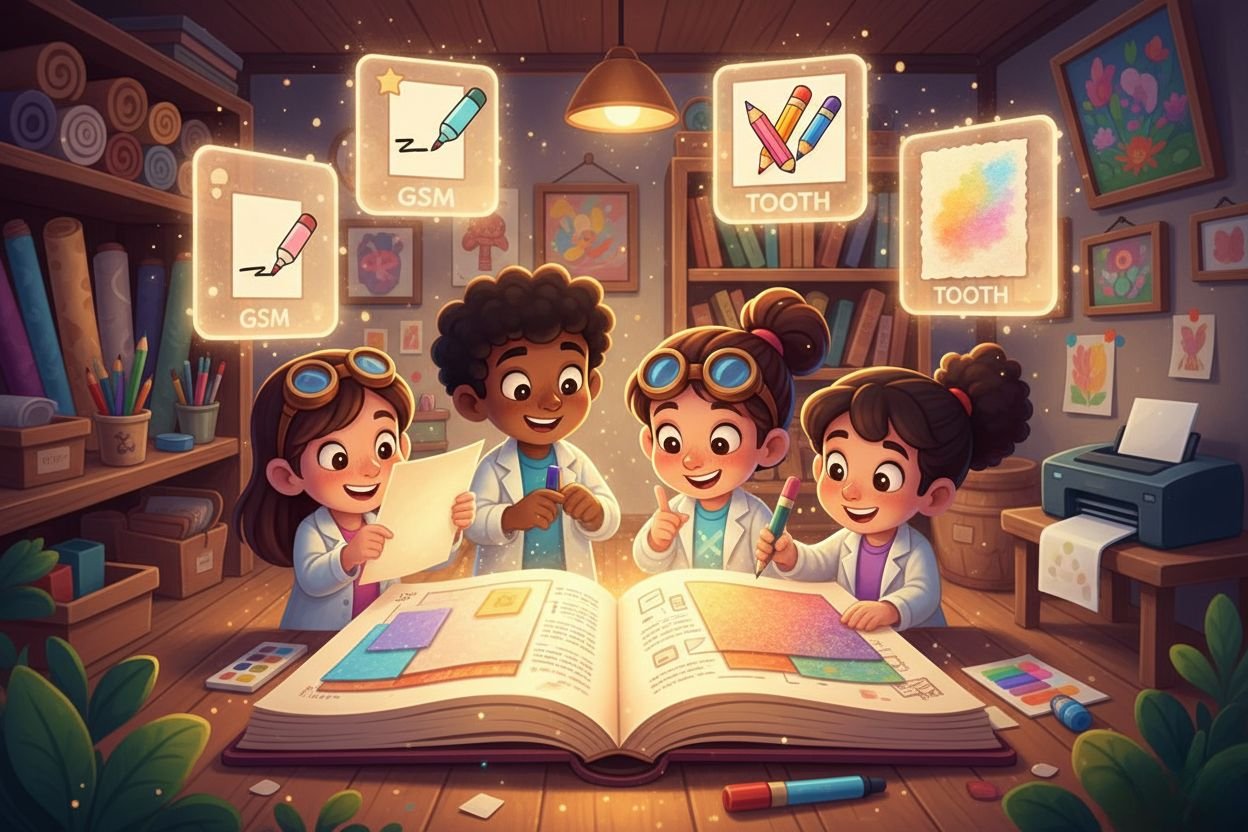
Stop wasting expensive art supplies! Not all paper is created equal, and the right foundation can dramatically elevate your coloring results. The correct sheet allows markers to glide, pencils to blend, and finished art to look professional. The wrong paper for coloring projects leads to frustrating bleed-through, fuzzy lines, and dull, lifeless color.
This guide breaks down exactly what you need to look for, matching the key qualities of paper to your favorite coloring tools, and giving you pro tips for printing, storage, and preservation.
1. The Four Non-Negotiable Paper Characteristics
Before you buy, know what matters most. These four fundamentals determine how your paper will react to your medium:
- Weight (GSM): This is your paper’s backbone. Heavy paper (measured in grams per square meter, or GSM) resists warping and prevents marker ink from soaking through. Target 120–160 gsm for everyday use, and jump to 200 gsm and higher for double-sided designs or any wet mediums (like watercolors).
- Tooth (Texture): Tooth refers to the surface texture that “grabs” your pigment. Smooth paper is essential for alcohol markers and fine-line pens, ensuring crisp edges. A light tooth is perfect for soft-core pencils, giving the pigment something to hold onto for layering and blending.
- Finish (Coated vs. Uncoated): Coated papers have a slick surface that keeps marker ink vibrant on the surface but may repel pencil wax. Uncoated papers absorb pigment easily, making them great for blending pencil layers, but they are prone to causing liquid inks to feather if the paper quality is too low.
- Brightness & Color: Always choose bright-white paper to ensure you see the true hue of your markers and pencils. For advanced depth, experiment with toned papers (like tan or gray), which allow you to effortlessly build both highlights (with white) and shadows.
2. Perfect Paper Pairings: Matching Medium to Surface
Selecting the right paper for coloring projects is all about chemistry. Here are the tried-and-true combinations for professional results:
| Coloring Medium | The Ideal Choice | Why It Works | Avoid |
| Colored Pencils | Bristol Vellum (250 gsm) | Its slight tooth allows for multiple layers and blending without quickly “eating up” your pencil leads. | Very smooth copy paper (no grip). |
| Alcohol Markers | Marker Paper (70–90 gsm) | This thin paper uses a special coating to prevent bleed-through and feathering. | Regular copy paper—it quickly bleeds and dulls the color. |
| Water-Based Pens | Mixed-Media Paper (180–250 gsm) | Offers the best balance of smoothness and absorbency needed for brush pens and light water application. | Heavy, rough watercolor paper (too porous). |
| Watercolor Pencils | Cold-Press Watercolor Paper (200–300 gsm) | The textured surface is designed specifically to handle heavy water application without buckling or tearing. | Thin drawing paper (it will wrinkle). |
| Crayons / Oil Pastels | 160 gsm Drawing Paper | The medium tooth allows the wax and oil pigments to adhere without crumbling off the surface. | Coated, slick presentation paper. Export to Sheets |
3. Pro Tips for Printing and Preservation
Even the best paper for coloring projects can be ruined by a bad printing job or poor storage.
- Printer Ink Matters: Laser printers are generally preferred because their crisp toner lines resist water and markers better. If you use an inkjet, ensure your ink is pigment-based, as dye-based inks can smear when wet.
- Handling Thick Stock: When printing on heavyweight cardstock (200 gsm+), always use your printer’s rear-feed tray to ensure a smooth paper path and prevent jamming.
- Achieving Flawless Pages: Always place a blotter sheet (a piece of scrap paper) directly beneath your current page when using any type of marker. This acts as a safety net against bleed-through.
- Protecting Finished Art: Preserve your work by storing finished pages in acid-free sleeves within a binder. For colored pencil or pastel work, a light coat of spray fixative (applied outdoors) prevents smudging. If you frame your art, use UV-filter glass to stop the colors from fading in sunlight.
Your Next Step: Test and Refine
The search for the perfect paper ends not on the shelf, but with your own tools. The right sheet is the one that flawlessly complements your specific medium and technique, not necessarily the most expensive brand. Now that you have the knowledge, your next step is to experiment! Take detailed notes on how different paper types react, and you will quickly build a personalized paper arsenal that makes every coloring session an absolute joy.

A children’s education writer and devoted mom of two who is on a mission to make learning simple, fun, and stress-free. With a strong background in child development and real-life parenting experience, she creates practical printables and activities that help kids learn through play — not pressure. Her goal is to support busy parents and teachers with ready-to-use resources that make learning enjoyable, engaging, and effective. She believes the best classroom is a happy one, whether that’s at the kitchen table or in a real classroom. When she’s not writing, she’s crafting with her kids, reading picture books, or creating new ideas to make learning more fun.







0 Comments